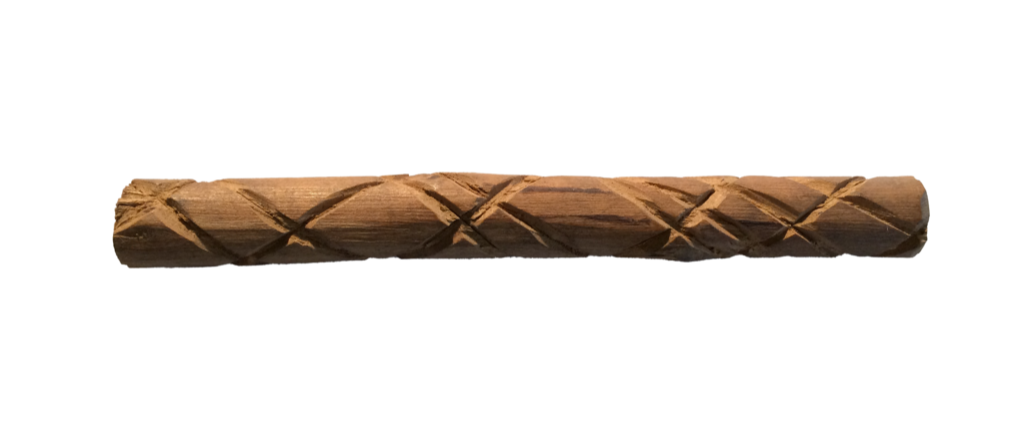
Message sticks are marked wooden objects that circulated all across the continent of Australia, facilitating communication between approximately 440 language groups. As such the message stick system boasts the widest geographic and linguistic range of any graphic code in the world, after writing.
The Australian Message Stick Project aims to identify all surviving message sticks in world collections and archives.
This work is helping Traditional Owners reconnect with their cultural heritage and recover historical knowledge about the events recorded through these objects.
The project is also helping scholars better ascertain the provenance of message sticks, including the names of their creators and the context in which they were used. Ultimately, researchers hope to understand how the system worked in practice, how it compares to other methods of graphic communication globally, and how best to interpret surviving artefacts.
To fulfil this work, the research team collaborates with First Nations communities and cultural organisations across Australia, and serves as an intermediary between traditional Knowledge Holders, archives and museums.
The project was first supported by The Mint research group at the former Max Planck Institute for the Science of Human History in Jena, Germany. It was subsequently funded by a Deutsche Forschungsgemeinschaft (DFG) grant and an Australian Research Council Discovery Early Career Researcher Award (DECRA) at the University of New England, Australia. The project is collaborating with the Discovery Indigenous ‘Songlines of Country’ project led by Dr Lorina Barker.